
Your typical workday will vary greatly depending on whether you are a Municipal or Prefectural ALT, your specific school placements, and even the teachers at your school. The following information is meant to give you an idea of what to expect.
Municipal ALTs
Every Board of Education is different, so your schedule and the expectations placed upon you can differ greatly. Your placement will most likely be in Elementary or Junior High. You may be the only ALT employed in your city or town, and you may work at only one school or find yourself with many visit schools (that you may only see once a month).
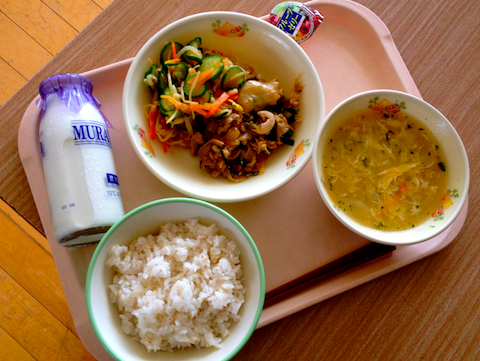
Within Elementary or JHS settings you will be able to eat kyushoku (school lunch), which is paid for monthly and fairly inexpensive. If you have any allergies or are a picky eater, you can discuss this with your supervisor or BoE. Lunch time is also a great opportunity to eat with your students and chat outside of class!
English education at the Elementary school (ES) level was made compulsory in 2011 for Grades 5 and 6 with plans to start even earlier. Most of the home room teachers (HRTs) you come across will most likely have very limited English, if any.
In theory the HRTs are meant to lead English classes, but in practice you may find yourself expected to plan and lead. If you feel you shouldn’t be the main teacher and it is becoming a problem, speak with your BoE.
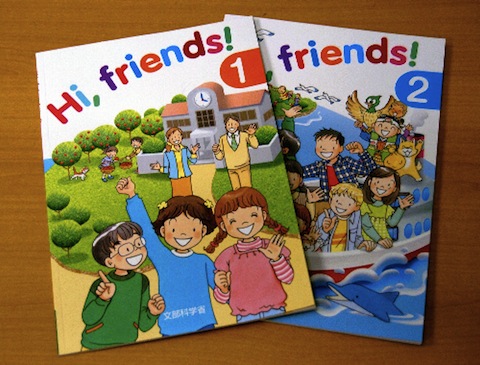
At ES, lessons mostly consist of speaking and listening exercises to build vocabulary and form simple sentences. English instruction at the elementary level is focused on making English fun and building a rough foundation for more standardized junior high school. The books contain many activities, chants, and songs, and are accompanied with an interactive DVD. Find out about your school’s facilities before trying to include the DVDs in your lesson planning!
Always bring your genki, and don’t worry if you are new to teaching–your students will be as enthusiastic to learn as you are to teach.
In Junior High (JHS) students will go to school even on the weekends, and dedicate a lot of time to their studies and clubs. Within the classroom, your role may fall anywhere from T2 ‘tape recorder’ to T1 planning and teaching your own classes with a JTE as a supporter. Each JTE will have a different way they want to team teach, so be flexible and prepared to adapt if you have multiple schools or teachers!
Students will generally have three English classes a week, and depending on your schedule, the JTE might teach the textbook on days you are elsewhere, so your in-class time can be dedicated to providing some relief from their intense studying or exam preparation. But even as a ‘tape recorder’ you can be a positive influence in the classroom and help students enjoy the content, and as a native speaker you can be much more interesting than the audio CD!
You may also be asked to help preparing students for English speech contests in the autumn, which may involve overtime to coach them on pronunciation, content and intonation after school. This is expected of you as an ALT, but speak with your supervisor if this is becoming difficult for you. You might also be expected to actively participate in your school’s English Club – you can help build a low-pressure environment to learn English and get to know your students better!
Prefectural ALTs
If your placement email only said Saga-ken, then you are employed by the Saga Prefectural Board of Education. Ken-ALTs primarily teach at Senior High School (SHS), but there are some JHS placements too. You’ll also have the opportunity to take part in activities such as judging English speech contests or participating in English days/camps.
Working at high schools means you’re much more likely to get a city placement. Although Saga isn’t particularly built up, some placements are definitely more rural than others! You’re likely going to have a convenient train line, a bus service, and be able to cycle easily otherwise. Housing will be arranged for you by the BoE.
Senior High School (SHS) lasts for three years. In addition to your base school, you’ll have one or two other schools to visit each week. You might be placed at academic, vocational, or special needs school. Some schools are combined JHS and SHS (with separate buildings), and between schools you may teach a wide range of ability. At some schools you’ll be teaching high-level university debating, and at others maybe elementary-level colours and animals for special needs classes.
High Schools usually do not have school lunches, but you may have the option of ordering a bento when you arrive in the morning (which can be a couple hundred yen cheaper if you bring rice from home!)
Keep in mind that your experience is really what you make of it, so treat this information not as a set description of what your life will be like but as foundational knowledge to help you settle in with some expectations.
 Saga JET Programme